
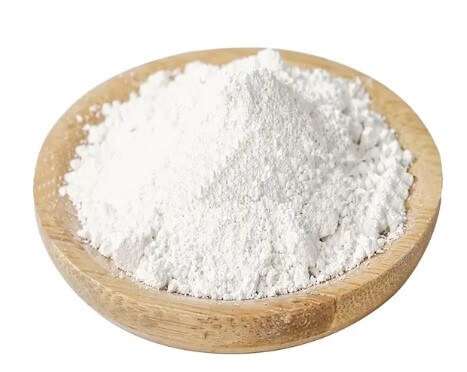
Chemical name: Benzene-1,3,5-tricarboxylic acid
Synonyms: 1,3,5-Benzenetricarboxylic acid, sym-Trimesic acid
CAS: 554-95-0
EINECS: 209-077-3
Molecular formula: C9H6O6
Molecular weight: 210.14
Specification:
| Item | Standard |
| Appearance | White crystalline powder |
| Purity | 98.5% min |
| Loss on drying | 0.5% max |
| Acid value | 788 mgKOH/g |
| Solubility (50mg/ml in Ethanol) | Cleared to slightly hazy |
Usage:
Trimesic acid is mainly used in the production of resins, plastics, and pharmaceuticals. It serves as a cross-linking agent in polymer chemistry due to its three carboxylic acid groups, which can react with various chemicals to form complex structures. This acid is also used in the synthesis of certain metal-organic frameworks (MOFs), which have applications in gas storage, purification, and catalysis.
Packing: 25 kg per woven bag or cardboard drum; custom packaging available.
Storage: Store in a cool, dry area away from moisture and incompatible materials. Minimum shelf life: 2 years.
Related Products
Interested in Trimesic acid?
Contact us for pricing, availability, certificates (COA/MSDS), and shipping terms. Our team responds within 24 hours.
Applications
Trimesic acid has gained significant attention in materials science for constructing metal-organic frameworks (MOFs). When coordinated with metals such as copper, iron, or aluminium, it forms porous 3D structures used in gas storage (CO₂, H₂, CH₄), drug delivery, and water harvesting applications. In polymer chemistry, it acts as a trifunctional cross-linker in thermoset resins, improving mechanical strength and thermal resistance. Pharmaceutical manufacturers use trimesic acid as a building block for antiviral and antibacterial compounds. Its three carboxylic groups also make it useful in dendrimer synthesis and specialty surfactant production. In the food industry, food-grade trimesic acid is used as a flavour enhancer. The compound is also explored as a ligand in coordination chemistry for catalyst design.
Trimesic Acid: From MOF Synthesis to Reverse Osmosis Membranes
Trimesic acid (benzene-1,3,5-tricarboxylic acid, CAS 554-95-0) is a symmetric, trifunctional aromatic carboxylic acid that has moved from a laboratory curiosity to a high-volume industrial monomer over the past two decades. Its C3-symmetric geometry — three carboxylic acid groups at 120° intervals on a benzene ring — drives directional self-assembly into predictable two- and three-dimensional network structures, underpinning its roles in both advanced material synthesis and membrane fabrication.
Metal-Organic Framework (MOF) Synthesis
Trimesic acid is the linker in HKUST-1 (Cu₃(BTC)₂), one of the most studied MOFs globally, which features exceptional surface area (≥1500 m² g⁻¹) and is commercially deployed in gas storage and separations. Researchers also use trimesic acid to build Zr-MOFs, Al-MOFs, and mixed-metal frameworks for CO₂ capture, hydrogen storage, and drug delivery scaffolds. Consistent purity (≥99%) and lot-to-lot reproducibility are essential for MOF synthesis — Unifarm Chemical provides full COA with HPLC purity data and residue-on-ignition values for research and pilot-scale procurement.
Polyester Resin and Other Industrial Uses
In polyester chemistry, trimesic acid is used as a branching agent to increase crosslink density, raising glass transition temperature and improving solvent resistance in alkyd and saturated polyester resins for coatings and adhesives. It has also been evaluated as a corrosion inhibitor additive and a chelating ligand in analytical chemistry for metal ion determination. Supply is available in 25 kg sealed bags; technical data sheet and MSDS provided. Contact us for pricing and availability. Related reading: Trimesic Acid in RO Membrane and MOF Applications.