
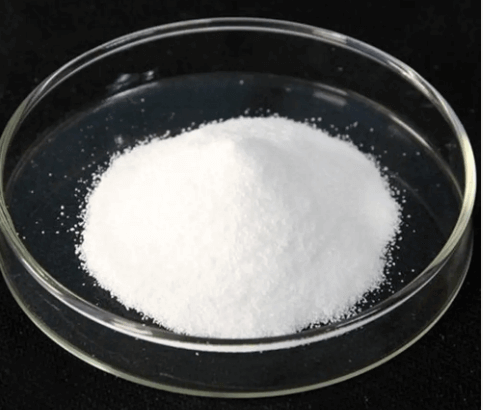
Chemical name: Diethylenetriaminepentaacetic Acid
Synonyms: DTPA; Pentetic acid
CAS No: 67-43-6
EINECS Number: 200-652-8
Molecular Formula: C14H23N3O10
Molecular Weight: 393.35
EINECS:200-652-8
Specification
| Item | Standard |
| Appearance | White crystal powder |
| Content | 99.0% min |
| PH(1% solution, 25℃) | 2.1-2.5 |
| Heavy metal as Pb | 0.001% max |
| Iron(Fe) | 0.001% max |
| Chloride(Cl) | 0.01% max |
| Sulfate (SO4) | 0.05% max |
| Chelated | 252 mgCaCO3/g min ( at PH=11) |
| Loss on drying | 0.2 max |
Characteristics: White crystalline granules, soluble in hot water and lye, slightly soluble in water, solubility in water (20℃) 5 g / l, and do not dissolve in organic solvents such as alcohols and ethers. Melting point: 230℃(decomposition).
Packing: 25kg bag/drum, customized packing is available.
Usage:
- Micronutrient Chelation: DTPA is used to chelate essential micronutrients like iron, zinc, and copper. It forms stable complexes with these nutrients, making them more available to plants, especially in alkaline and calcareous soils.
- Fertilizer Additive: It’s added to fertilizers to improve the effectiveness of micronutrients by preventing them from reacting with other minerals in the soil.
Related Products
Interested in DTPA Acid?
Contact us for pricing, availability, certificates (COA/MSDS), and shipping terms. Our team responds within 24 hours.
Applications
DTPA acid is the primary raw material for producing DTPA chelated micronutrient fertilisers, including DTPA Fe, DTPA Mn, and DTPA Zn. Compared to EDTA, DTPA forms more stable chelate complexes at higher pH values (effective in pH 4–7.5), making it the preferred chelating agent for calcareous and alkaline soils. In the pulp and paper industry, DTPA serves as a peroxide stabiliser and heavy metal sequestrant during bleaching. Water treatment applications include scale inhibition and metal control in industrial cooling water systems. DTPA is also used in medical diagnostic imaging as the chelating ligand in 99mTc-DTPA radiopharmaceuticals for kidney function assessment. In cosmetics, DTPA stabilises formulations against metal-catalysed oxidative degradation.
Further reading: DTPA Acid: Industrial Applications, Properties & Comparison with EDTA
DTPA Acid: Superior Chelation for Industrial and Agricultural Applications
Diethylenetriaminepentaacetic acid (DTPA, CAS 67-43-6) is an octadentate chelating agent that forms more stable metal complexes than EDTA across a wider pH range — particularly above pH 7. While EDTA has five potential donor atoms (four carboxylate oxygens and two amine nitrogens), DTPA adds a third amine nitrogen to give eight coordination sites, dramatically increasing stability constants for iron, copper, zinc, and heavy metal complexes. This makes DTPA the chelant of choice in applications where EDTA-based systems fail due to high pH or competing metal concentrations.
DTPA vs EDTA: When to Use Each
EDTA Fe (EDTA iron chelate) becomes unstable above pH 7.0 — iron is released from the chelate and precipitates as iron hydroxide. DTPA Fe remains fully stable up to pH 7.5, and EDDHA Fe up to pH 9. For alkaline soils and high-pH fertigation programmes, DTPA Fe is therefore the preferred intermediate option between EDTA Fe and more expensive EDDHA Fe. In industrial pulp bleaching, DTPA is used in the O₂ and H₂O₂ bleaching stages to chelate manganese and iron ions at alkaline pH (8–10), where EDTA would release the metals and allow them to catalyse peroxide decomposition. This application alone accounts for a large share of global DTPA consumption.
Industrial Applications and Supply
Beyond pulp and paper, DTPA acid finds use in nuclear decontamination (chelation of actinides and fission products), metal recovery from plating wastewater, and as a stabiliser in hydrogen peroxide formulations for textile bleaching. DTPA pentasodium salt (DTPA-5Na) is the liquid form commonly used in bleaching circuits; DTPA free acid is the precursor used in salt preparation and direct acid-process applications. Unifarm Chemical supplies DTPA acid at ≥99% purity with low heavy metals content. Full technical documentation (COA, MSDS, TDS) provided. Contact us for current pricing, available grades, and export packing options. See also: DTPA Acid Industrial Applications Guide.