
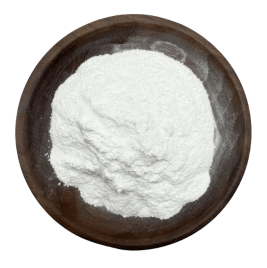
Chemical name: Ethylenediaminetetraacetic acid tetrasodium salt hydrate
Synonyms: Tetrasodium EDTA hydrate; EDTA tetrasodium salt hydrate
Cas No: 13235-36-4
Molecular formula: C10H14N2O8Na4·4H2O
Molecular weight: 452.23
EINECS:205-358-3
Specification
| Item | Standard |
| Appearance | White crystal powder |
| Content(as 452.2) | 99.0% min |
| PH(10g/L, 25℃) | 10.5-11.5 |
| Heavy metal as Pb | 0.001% max |
| Iron(Fe) | 0.001% max |
| Chloride(Cl) | 0.05% max |
| Sulfate (SO4) | 0.05% max |
| Chelated | 215 mgCaCO3/g min |
| Bulk density | 790-950 kg/m3 |
Packing: 25kg bag/drum, customized packing is available.
Characteristics: dust-free product, applied as stabilizing agent of cosmetics, chelating agent and softening agentof medicines, catalyst of synthetic rubber, terminator of acrylic polymerization, dyeing and printing auxiliary and washing auxiliary detergent.
Usage:
1. Micronutrient Delivery: As a chelating agent, it’s used to complex micronutrients like iron, zinc, copper, and manganese, making them more bioavailable to plants. This is particularly useful in soils with high pH where these nutrients are less accessible.
Related Products
Interested in EDTA 4Na?
Contact us for pricing, availability, certificates (COA/MSDS), and shipping terms. Our team responds within 24 hours.
Applications
Due to its alkaline pH (10.5–11.5), EDTA tetrasodium salt is preferred over EDTA disodium in applications requiring an alkaline environment. In textile and paper processing, it functions as a metal sequestrant during hydrogen peroxide bleaching, preventing metal-catalysed decomposition. Industrial cleaning products and hard surface detergents use EDTA 4Na to soften water and inhibit limescale build-up. In synthetic rubber manufacturing, it acts as a terminator for acrylic polymerisation reactions. Personal care products such as shampoos and liquid soaps incorporate EDTA 4Na as a preservative potentiator. EDTA 4Na is preferred in alkaline cleaning and cosmetic formulations, while EDTA 2Na is used in neutral to mildly acidic systems. Both forms are produced from the same EDTA acid precursor.
EDTA Tetrasodium: High-pH Chelation for Industrial Processes
Tetrasodium EDTA (EDTA-4Na) is the fully neutralised, four-sodium salt of ethylenediaminetetraacetic acid. With all four carboxylic acid protons replaced by sodium, a 1% aqueous solution has a pH of approximately 10.5–11.5 — making it the correct grade for applications that operate in strongly alkaline conditions. EDTA-4Na dissolves rapidly in water to form a colourless to pale yellow solution with outstanding chelation capacity for calcium, magnesium, iron, and heavy metals.
Industrial Applications
In industrial cleaning and detergent formulation, EDTA-4Na is added to alkaline cleaners to sequester hardness ions and prevent calcium soap precipitation on surfaces. In the textile industry, it removes metal ion impurities from fibre before dyeing, producing more uniform colour uptake. In the photographic processing industry, it was historically used as a bleach component for iron-EDTA complex formation. In oilfield applications, EDTA-4Na is used in scale dissolver formulations to chelate calcium carbonate and barium sulphate deposits from production tubing. In agricultural chelate manufacturing, EDTA-4Na is used as a precursor to produce EDTA micronutrient chelates (Fe, Mn, Zn, Cu) through double-displacement reactions with metal sulphate salts.
Technical Considerations and Supply
EDTA-4Na is incompatible with concentrated acids (will precipitate EDTA free acid) and should not be mixed with calcium or magnesium salts in concentrated solution before dilution to working concentration. It is thermally stable up to 150°C and does not degrade under normal storage conditions. Unifarm Chemical supplies EDTA-4Na with minimum assay of 99% on a dry basis, with full technical documentation including COA, MSDS, and test reports for heavy metals content. Bulk drums (25 kg), IBC, and custom packing options are available. Contact us for current pricing, lead time, and port of loading options.