
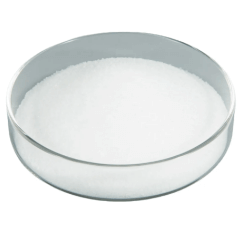
Chemical name: Ethylenediaminetetraacetic acid disodium salt dihydrate
Synonyms: EDTA-Na2; EDTA disodium dihydrate
Molecular formula: C10H14N2O8Na2·2H2O
Molecular weight: 372.24
CAS No: 6381-92-6
EINECS: 205-358-3
Specification
| Item | Standard |
| Appearance | White crystal powder |
| Content | 99.0% min |
| PH | 4.0-5.0 |
| Heavy metal as Pb | 0.001% max |
| Iron(Fe) | 0.001% max |
| Chloride(Cl) | 0.05% max |
| Sulfate (SO4) | 0.05% max |
| Chelated | 265 mgCaCO3/g min |
| Bulk density | 850-1050 kg/m3 |
Packing: 25kg bag/drum, customized packing is available.
Characteristics: dust-free product, applied in detergent, dyeing auxiliary, fiber treatment agent and agricultural micro-fertilizer.
Usage:
1. Micronutrient Fertilizer: It is used to chelate micronutrients like iron, zinc, copper, and manganese. Chelated forms of these nutrients are more easily absorbed by plants, improving their availability, especially in high pH soils where micronutrients are less accessible.
2. Soil Treatment: EDTA disodium dihydrate helps in mobilizing and stabilizing heavy metals in contaminated soils, aiding in soil remediation efforts.
Related Products
Interested in EDTA 2Na?
Contact us for pricing, availability, certificates (COA/MSDS), and shipping terms. Our team responds within 24 hours.
Applications
Beyond micronutrient chelation, EDTA disodium dihydrate has widespread industrial applications. In the pulp and paper industry, it prevents peroxide decomposition during bleaching, improving brightness stability. Textile manufacturers use it as a dyeing auxiliary to remove metal ions that interfere with dye uptake and colour uniformity. Water treatment plants deploy EDTA 2Na to control scale formation and sequester heavy metals in process water. Cosmetic and personal care products rely on it to stabilise formulations by binding trace metals that cause rancidity. In the food industry, it is approved as an antioxidant synergist and preservative (E385 in EU). Pharmaceutical applications include anticoagulant reagents in blood collection tubes and formulations for treating heavy metal poisoning.
EDTA Disodium: Industrial and Agricultural Chelating Agent
Disodium EDTA (EDTA-2Na, ethylenediaminetetraacetic acid disodium salt) is one of the most widely used chelating agents in industrial chemistry. Its two free carboxylic acid groups give it a moderately acidic character (pH of a 1% solution: approximately 4.3–4.7), which makes it the chelate of choice for processes that require chelation at acidic to neutral pH. It forms stable, water-soluble complexes with calcium, magnesium, iron, copper, zinc, and other divalent and trivalent metal ions.
Key Industrial Applications
In water treatment, EDTA-2Na is used to sequester calcium and magnesium ions in boiler feedwater and cooling tower circuits, reducing scale formation and corrosion. In the pulp and paper industry, it is used to chelate manganese and iron ions that would otherwise catalyse bleaching agent decomposition, improving bleach yield and reducing chemical consumption. In personal care and cosmetics, EDTA-2Na appears in shampoos, facial cleansers, and lotions as a preservative potentiator — it chelates trace metals that would otherwise activate microbial lipase and reduce product shelf life. In electroplating, it controls free metal ion concentration in plating baths to produce uniform, high-quality deposits.
EDTA-2Na vs EDTA-4Na: Which to Choose
EDTA-4Na (tetrasodium EDTA) carries four sodium cations and is strongly alkaline (pH ~11 in solution), making it suitable for alkaline process environments. EDTA-2Na, with two free acid groups, is preferred when process pH needs to remain near neutral (5–7), or when lower sodium input is desired. Both grades form equivalent chelate complexes, but EDTA-2Na has better solubility at low pH and is the standard form in food-grade and pharmaceutical applications. Unifarm Chemical supplies both grades; contact us to confirm which specification matches your process requirements. Full technical data sheets, COA, and MSDS are available upon request.